
How Pre-Plucked Hairlines Improve Lace Wigs Wholesale
For businesses sourcing lace wigs wholesale, product realism has become an increasingly important factor when evaluating quality. Customers want wigs that blend naturally with the forehead and create the appearance of hair growing directly from the scalp. One of the key details behind this effect is a pre-plucked hairline.
Unlike a straight, uniform hairline that can make a wig look artificial, a carefully pre-plucked design creates gradual density changes and irregular hair distribution. Combined with quality lace, realistic ventilation and human hair, this construction can help simulate the natural growth pattern of real hair.
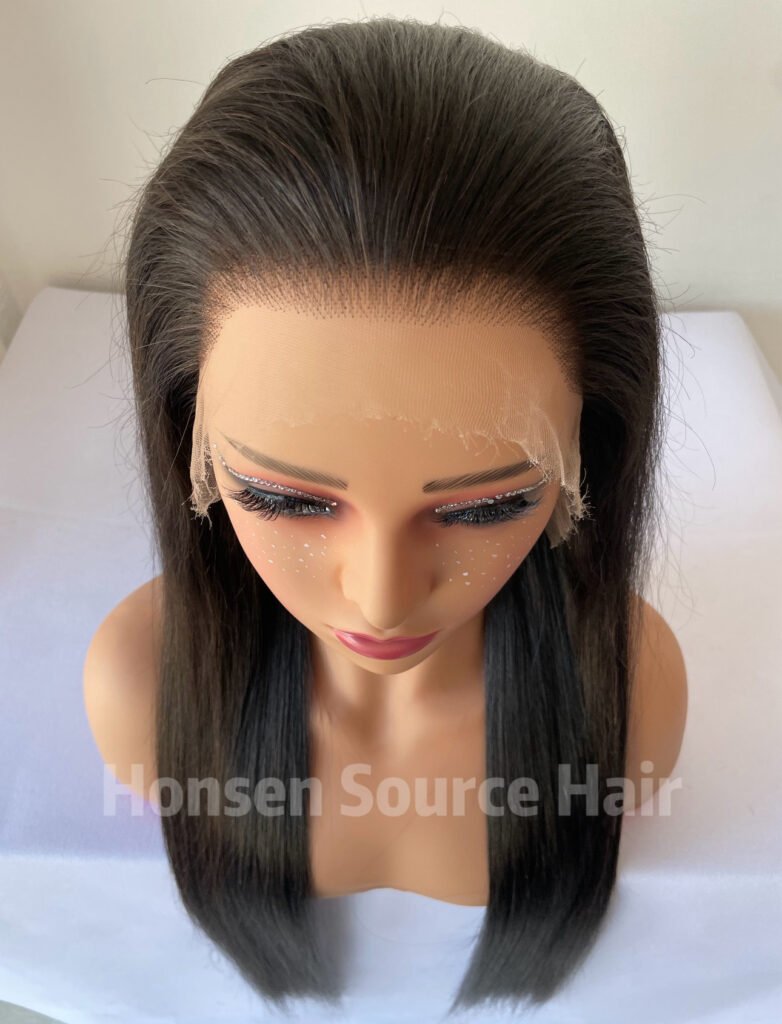
For B2B buyers, understanding how this detail affects the finished product can help when selecting products, comparing samples and developing a premium lace wigs wholesale collection.
Why a Natural Hairline Matters in Lace Wigs
The hairline is one of the first areas people notice when looking at a wig.
Natural human hair does not normally grow in a perfectly straight line with identical density from one side to the other. Individual hairs emerge at different angles, with finer hairs and lower density often appearing toward the forehead.
A wig with an overly dense or perfectly straight front can therefore create a visible boundary between the lace and the wearer’s skin.
A pre-plucked hairline addresses this issue by gradually reducing hair density around the front of the wig. The result is a softer transition that can make the hairline appear less uniform and more similar to natural hair growth.
Honsen Source Hair’s existing lace wig content highlights the importance of natural hairlines, hair density, ventilation and consistent production quality for wholesale lace wigs.
What Is a Pre-Plucked Hairline?
A pre-plucked hairline is a wig construction technique in which selected hairs are carefully removed or reduced from the front hairline before the product reaches the customer.
The goal is not simply to make the hairline thinner.
The process needs to create a controlled transition between different density levels. The front section should look lighter and more irregular, while the density gradually increases farther behind the hairline.
This creates a visual effect closer to the way natural hair grows from the scalp.
For B2B buyers, this distinction is important. A product should not be judged only by whether the hairline is described as “pre-plucked.” The quality of the actual transition, ventilation and density distribution should also be evaluated.
How Pre-Plucking Simulates Natural Hair Growth
A realistic hairline depends on several details working together.
Gradual Density
Natural hairlines usually have variations in density rather than a completely uniform wall of hair. Pre-plucking reduces excessive density around selected areas to create a softer transition.
Irregular Hair Direction
Individual hairs do not all grow in exactly the same direction. Skilled ventilation can create subtle differences in hair direction that make the hairline look more natural.
Fine Front Hairs
Smaller and finer hairs around the front can help create a gradual transition between the skin and the main hair density.
Controlled Hairline Shape
The shape of the hairline also matters. A carefully designed hairline can follow natural variations rather than forming a rigid horizontal boundary.
Together, these details help create a more realistic scalp-growth effect.
Pre-Plucked Hairlines and Lace Quality Work Together
A pre-plucked hairline cannot create a completely natural appearance on its own.
The lace material also plays an important role.
Thin and suitable lace can help reduce the visual boundary between the wig and the skin, while careful hair ventilation determines how individual strands emerge from the lace.
This is particularly important for HD lace wigs wholesale.
Honsen Source Hair’s HD lace products emphasize ultra-thin HD transparent lace, natural-looking hairlines and virgin human hair as part of the overall product construction.
The best result therefore comes from combining:
Quality Human Hair + Suitable Lace + Precise Ventilation + Pre-Plucked Hairline + Controlled Density
Rather than treating these features as separate selling points, manufacturers need to consider how they work together in the finished wig.
Why Hand-Tied Craftsmanship Matters
The construction of the hairline requires attention to individual strands.
Hand-tied production can provide greater control over hair placement, direction and density. This is particularly useful when creating detailed hairlines that need to transition gradually from the forehead to the main body of the wig.
Honsen Source Hair’s 613 blonde lace wig product, for example, describes hand-tied craftsmanship combined with a delicate pre-plucked hairline to create a realistic scalp effect.
For wholesale buyers, craftsmanship becomes particularly important because a product needs to maintain its appearance across multiple units rather than only in one carefully prepared sample.
The Balance Between Naturalness and Usability
Making a hairline look natural does not mean simply removing as much hair as possible.
If too much hair is removed, the front may become excessively thin and difficult to style. If too little is removed, the hairline may remain too dense and appear artificial.
The objective is to find the right balance.
This balance can depend on:
- Hair density
- Lace construction
- Hair texture
- Hair length
- Hairline shape
- Intended styling
- Customer preferences
For this reason, B2B buyers should confirm the specific density and hairline requirements when ordering lace wigs wholesale, particularly for private-label or customized products.
Pre-Plucked Hairlines Create More Value for Wholesale Buyers
For retailers, salons and private-label brands, natural hairline construction can influence how a product is positioned in the market.
A more realistic hairline can support premium product positioning because customers often evaluate a lace wig based on visible details such as the front hairline, lace blending and overall scalp effect.
This gives brands an opportunity to build differentiated collections rather than competing solely on price.
For example, a business can offer standard lace wigs for everyday customers while adding pre-plucked HD lace styles for customers seeking a more realistic finish.
Honsen Source Hair’s current product range includes lace wigs, HD lace front wigs, 13×6 lace front wigs and other human hair products, allowing buyers to build a broader wholesale product portfolio.
Quality Control Is Essential for Consistent Hairlines
A natural-looking sample is only valuable to a B2B buyer if the same quality can be maintained during bulk production.
For this reason, hairline inspection should be part of the overall quality-control process.
Important inspection points include:
- Hairline density
- Pre-plucking consistency
- Hair direction
- Knot appearance
- Lace condition
- Ventilation quality
- Hair shedding
- Overall symmetry
Honsen Source Hair’s quality-testing content specifically identifies lace and hairline inspection as important checkpoints, including lace condition, hairline density, knot appearance, ventilation consistency and pre-plucking quality.
This type of inspection helps transform an attractive product concept into a repeatable wholesale specification.
Custom Pre-Plucked Hairlines for Private Labels
Different brands may target different customer groups.
One brand may prefer a fuller hairline, while another may want a softer and more heavily pre-plucked appearance. Some buyers may also have specific requirements for lace type, hair density, length or cap construction.
This is where OEM/ODM manufacturing can become useful.
Honsen Source Hair’s OEM/ODM service supports product development, sampling, mass production, quality inspection and production tracking. Its existing HD lace content also lists customization options including hair length, density, texture, color, lace type and cap construction.
For a private-label business, these capabilities can make it easier to turn a preferred hairline design into a repeatable product specification.
What B2B Buyers Should Check Before Ordering
When evaluating a lace wigs wholesale supplier, buyers should look beyond product photos.
Ask for samples and evaluate:
- Is the hairline too straight or overly dense?
- Does the density gradually transition from the forehead?
- Are individual hairs ventilated naturally?
- Does the lace blend appropriately with the skin?
- Is the hairline consistent across different samples?
- Can the supplier customize density and hairline design?
- Does the factory inspect pre-plucking quality before shipment?
- Can the supplier maintain the approved specifications during bulk production?
These questions can help buyers distinguish between a product that simply uses the term “pre-plucked” and one that has been carefully constructed around natural hair growth.
Honsen Source Hair: Natural Hairline Design for Wholesale Lace Wigs
For businesses sourcing lace wigs wholesale, the hairline is an important part of the overall product experience.
A carefully designed pre-plucked hairline can reduce excessive density, create a softer transition and better simulate the irregular growth pattern of natural hair. When combined with quality human hair, suitable lace and precise ventilation, it can contribute to a more realistic finished product.
Honsen Source Hair focuses on human hair wigs and related wholesale products, with current product offerings including lace wigs, HD lace front wigs, 13×6 lace front wigs and customized wig solutions. Its production and quality-control approach emphasizes natural hairlines, selected human hair, detailed craftsmanship and batch-level inspection.
For retailers, salons, distributors and private-label brands, these details can help create a more differentiated wig collection.
If you are developing a lace wigs wholesale product line and need specific hair density, pre-plucked hairline, lace type, cap construction or branding requirements, Honsen Source Hair can support sample development and customized wholesale production.