
Human Hair Wig Manufacturer China: Flexible Customization for Every Market
When searching for a human hair wig manufacturer China, buyers often need to solve two different problems at the same time. They need mainstream wig styles that can be produced efficiently and consistently for everyday market demand, but they may also need highly customized products for premium brands, salons, private-label businesses, and specialized customers.
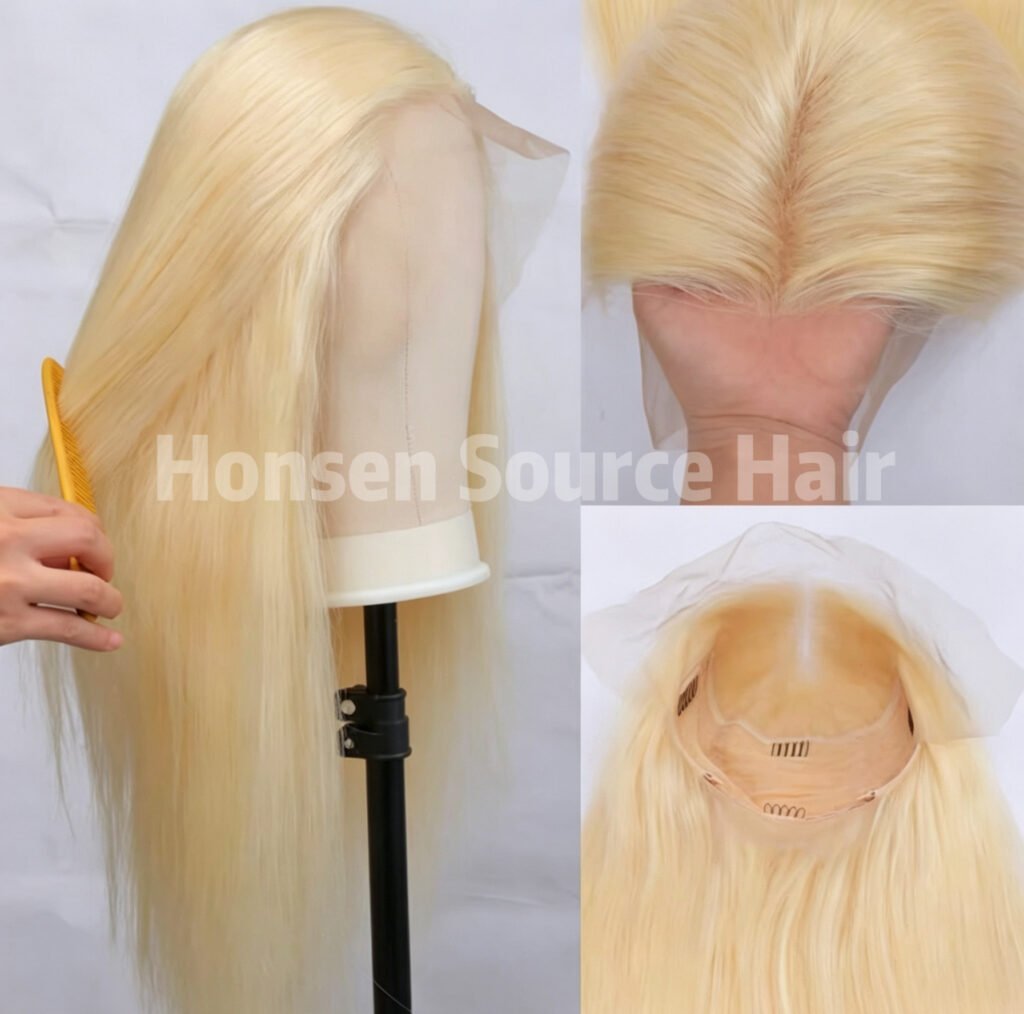
At Honsen Source Hair, our approach is to combine these two capabilities rather than treating them as separate business models. Standard human hair wigs provide an efficient foundation for wholesale buyers, while flexible customization allows brands to adjust colors, textures, densities, lace configurations, cap specifications, packaging, and other details according to their market positioning.
This balance allows a professional manufacturer to serve both high-volume mainstream demand and more specialized high-end requirements.
Why Flexible Manufacturing Matters in Today’s Wig Market
The global wig market is not made up of one type of customer.
Some wholesalers need reliable best-selling styles that can be reordered regularly. Salons may want popular lengths and textures that are easy to sell to everyday customers. E-commerce brands may need several standard products to build a broad catalog.
At the same time, premium brands often require something different.
They may need exclusive colors, specific hair densities, customized lace designs, private labeling, special packaging, or product specifications that are not available from standard wholesale catalogs.
A manufacturer that only produces standard products may struggle to serve these specialized requirements. A manufacturer that focuses only on highly customized units may not have the efficiency needed for larger wholesale orders.
The solution is a flexible manufacturing model that can support both.
Mainstream Products Create a Stable Foundation
Standardized products remain an important part of the wholesale wig business.
Popular human hair wig styles allow distributors, salons, retailers, and online stores to respond quickly to established consumer demand.
For example, Honsen Source Hair’s current collection includes BW human hair wigs, 613 blonde lace wigs, HD lace front wigs, and 13×6 lace wigs, alongside human hair bundles and extensions. The company positions these products around virgin human hair, natural textures, realistic hairlines, and wholesale cooperation.
These established product categories give buyers a practical starting point.
Instead of developing every product from scratch, a business can select proven wig constructions and then adjust specific details when necessary.
This can shorten the development process while allowing brands to maintain a distinctive product offering.
1. Flexible Customization Goes Beyond Color
Customization is often associated with changing hair color, but professional wig customization can involve much more.
Depending on the product and project, buyers may need to customize:
- Hair length
- Hair texture
- Hair density
- Hair color
- Lace type
- Lace size
- Cap construction
- Cap size
- Hairline design
- Curl pattern
- Parting configuration
- Branding
- Labels
- Packaging
This level of flexibility allows a standard product concept to become a product that fits a specific target market.
For example, a retailer may start with a popular lace front wig construction but request a different density, color, or cap specification for its own customer base.
This approach can be more efficient than developing an entirely new product from zero.
2. OEM and ODM Connect Standard Production With Custom Products
For brands that require deeper customization, OEM and ODM services provide a more structured solution.
With OEM, the buyer can provide product designs, samples, or technical specifications, while the manufacturer organizes production according to those requirements.
With ODM, the manufacturer can provide product development and design support, allowing buyers to select or adapt existing concepts and build products under their own brand.
Honsen Source Hair’s OEM/ODM service describes both models and states that its process covers product development, sampling, mass production, quality inspection, and shipment. It also supports both small trial orders and large bulk orders.
For B2B buyers, this creates a useful bridge between mainstream wholesale products and premium customized collections.
3. Mainstream Products and Premium Customization Can Work Together
A common mistake is to think that a business must choose between standard wholesale wigs and high-end customized products.
In reality, the two product strategies can complement each other.
A growing hair business might use mainstream wigs to create a stable core product line while introducing customized units as premium products.
For example:
Mainstream product line
- Popular lengths
- Popular textures
- Standard colors
- Common lace configurations
- Ready-to-order products
Premium product line
- Exclusive colors
- Customized densities
- Special lace specifications
- Private labeling
- Custom packaging
- Unique hairline designs
This two-level approach allows a brand to address different customer groups without completely rebuilding its supply chain.
4. Virgin Human Hair Provides a Strong Customization Foundation
Customization is much more effective when the underlying raw material is consistent.
Honsen Source Hair states that it uses selected virgin human hair and emphasizes intact cuticles as part of its product positioning. The company also highlights natural texture, styling flexibility, reduced tangling, and longer service life with appropriate care.
For buyers exploring virgin human hair wholesale, consistent raw material quality is important because customized products still need to maintain reliable performance.
A premium brand may request a specific color or texture, but the final product still needs to meet expectations for softness, appearance, styling, and durability.
Good customization therefore begins with dependable raw materials.
5. Lace Customization Helps Brands Differentiate
Lace construction is another area where customization can make a significant difference.
Different customers may prefer different lace configurations depending on the desired hairstyle, installation method, appearance, and price point.
A business may choose standard lace for an everyday product line and HD lace for a premium collection.
Honsen Source Hair’s existing product range includes HD lace front wigs and 13×6 lace wigs, while its product information highlights features such as HD transparent lace, pre-plucked hairlines, and natural-looking finishes.
This gives wholesale buyers the opportunity to build different product levels around different lace specifications.
For brands operating in the lace wigs wholesale market, that flexibility can be particularly useful when developing products for different customer segments.
6. Customization Should Not Sacrifice Production Efficiency
Customization is valuable, but it also introduces complexity.
If every order requires a completely different production process, lead times can increase and quality can become more difficult to control.
This is why an experienced manufacturer needs standardized production procedures behind its customization service.
The objective is to customize the right elements while keeping the underlying manufacturing process organized.
Honsen Source Hair describes a cooperation process of:
Demand Communication → Quotation → Sample Confirmation → Contract Signing → Mass Production Supervision → Quality Inspection & Shipment.
This structured workflow helps connect customer-specific requirements with controlled manufacturing.
For buyers, sample confirmation is particularly important because it creates a clear reference before larger production begins.
7. Small Trial Orders and Large Orders Need Different Support
Not every buyer starts with a large order.
New brands may want to test a product before committing to significant inventory. Established distributors may already know their best-selling products and require larger quantities.
A flexible manufacturer therefore needs to support different purchasing stages.
Honsen Source Hair states that its services accommodate both small trial orders and large bulk orders.
This can be useful for businesses that want to:
- Test a new product.
- Collect customer feedback.
- Adjust specifications.
- Confirm the final sample.
- Increase order quantities.
- Develop additional customized products.
The same supplier can potentially support the business from initial product testing through larger-scale purchasing.
8. Quality Control Becomes More Important as Customization Increases
The more customized a product becomes, the more important quality control becomes.
A standard wig has an established specification. A customized wig may have several unique requirements that need to be checked individually.
Quality control may therefore cover:
- Approved hair type
- Hair length
- Density
- Texture
- Color
- Lace specification
- Cap measurements
- Hairline design
- Branding
- Packaging
- Final quantity
Honsen Source Hair states that strict quality inspection is implemented for every batch and that its production process includes mass production supervision followed by quality inspection and shipment.
For businesses ordering OEM human hair wigs, this is particularly important because the final product needs to match the specifications established during the sampling stage.
9. Customization Supports Premium Brand Positioning
Premium brands often need products that cannot be found in every wholesale catalog.
Customization can help create differentiation.
For example, a brand may develop a signature density, color combination, lace construction, or packaging style that becomes part of its visual identity.
The manufacturer then becomes more than a source of inventory. It becomes part of the product-development process.
This is one reason why an experienced human hair wigs manufacturer can be valuable for brands that want to move beyond generic wholesale products.
The manufacturer’s production capabilities, raw material resources, craftsmanship, and customization process can all contribute to the brand’s final product.
How to Choose a Flexible Human Hair Wig Manufacturer
Before selecting a supplier, buyers should evaluate both standard production and customization capabilities.
1. Product Range
Does the supplier offer mainstream products such as lace front wigs, human hair wigs, bundles, and extensions?
2. Raw Material Quality
Can the manufacturer provide consistent virgin human hair and explain its raw material standards?
3. Customization
Can the supplier adjust color, density, texture, lace, cap specifications, branding, and packaging?
4. Sampling
Can you receive and approve a sample before mass production?
5. Production Capacity
Can the supplier handle both small trial orders and larger wholesale quantities?
6. Quality Control
Does the supplier inspect customized products against approved specifications?
7. Communication
Can the manufacturer provide professional one-on-one support throughout product development and production?
These factors help buyers distinguish a flexible manufacturing partner from a supplier that simply sells pre-made products.
From Wholesale Supplier to Long-Term Manufacturing Partner
For many businesses, the ideal supplier is not simply the company offering the lowest quotation.
A long-term wholesale wig supplier should be able to grow with the buyer.
The relationship may begin with a few standard products. After market testing, the buyer may request new colors or textures. Later, the business may develop private-label products or completely customized collections.
A supplier with flexible production capabilities can support these stages without requiring the buyer to change suppliers every time the business evolves.
This creates a more efficient supply chain and can make product development easier over time.
Honsen Source Hair: Mainstream Products With Flexible Customization
For businesses looking for a human hair wig manufacturer China, Honsen Source Hair combines established human hair wig categories with flexible customization and OEM/ODM services.
The company’s product range covers mainstream categories such as human hair wigs, HD lace front wigs, 13×6 lace wigs, 613 blonde wigs, bundles, and hair extensions. Its OEM/ODM service is designed to support product development, sampling, mass production, quality inspection, and shipment.
This allows different types of buyers to work from different starting points.
A distributor can order established wholesale products.
A salon can select popular styles for its inventory.
An e-commerce brand can build a broader product catalog.
A private-label company can develop customized products.
A premium brand can use OEM or ODM services to create a more specialized collection.
The underlying goal is to make customization flexible without losing the efficiency and consistency required for wholesale production.
Build a Product Line That Fits Your Market
The modern wig market does not have a single definition of the “right” product.
Mass-market customers may prioritize availability, popular styles, and practical pricing. Premium customers may prioritize specialized construction, exclusive designs, higher-end materials, and personalized details.
A flexible manufacturer needs to understand both.
By combining mainstream human hair wig production with OEM and ODM capabilities, Honsen Source Hair aims to give buyers more options without forcing them to choose between production efficiency and product differentiation.
If you are sourcing wholesale human hair wigs from China, looking for virgin human hair wholesale, developing lace wigs wholesale, or planning your own OEM human hair wigs collection, Honsen Source Hair can discuss your product requirements, sample specifications, customization needs, and bulk order plans.
Author & Publishing Information
Author: Honsen Source Hair Editorial Team
Reviewer: Honsen Source Hair Team
Published: September 19, 2026
Last Updated: September 19, 2026
Contact: +86 18854297087
Email: sales@honsensource.com