
Wholesale Human Hair Wigs: Hair Direction in Construction
Wholesale human hair wigs require careful attention to hair direction during construction. This detail affects how strands fall, move, and respond to styling, influencing the finished wig’s natural appearance and versatility. For B2B buyers, understanding hair direction makes it easier to evaluate construction quality, compare samples, and confirm product specifications with Honsen Source Hair.
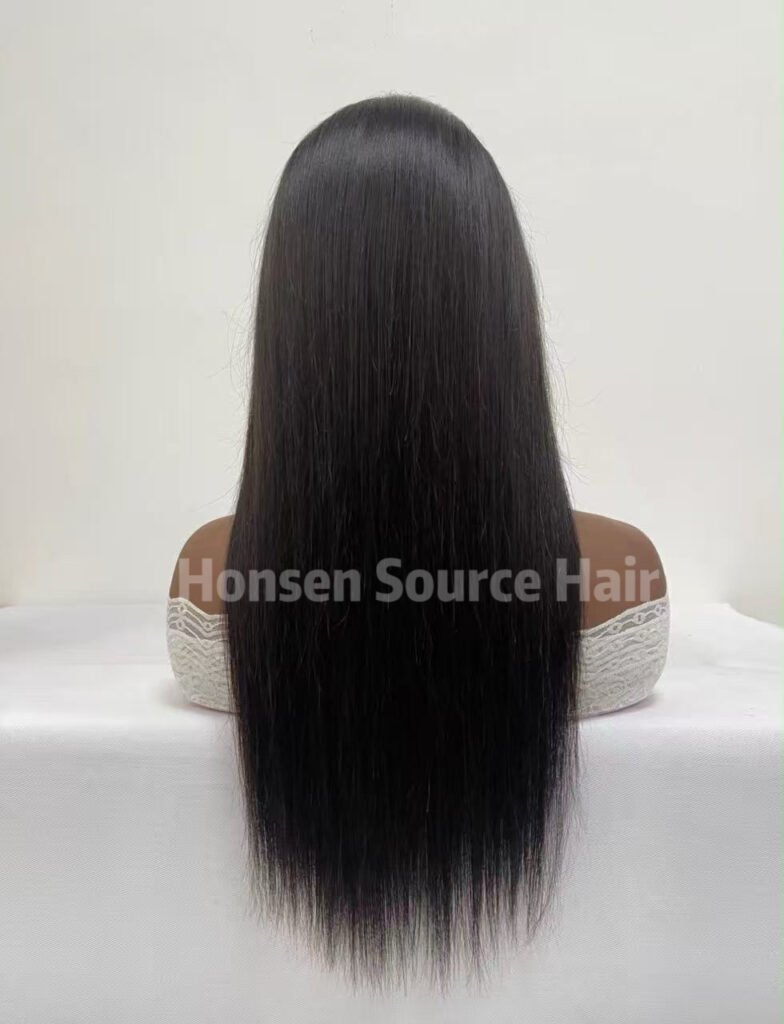
What Does Hair Direction Mean in Wig Construction?
Hair direction is the angle at which strands are ventilated into lace or another cap material. It determines how the hair falls when worn, brushed, parted, or restyled.
Construction should match the intended hairstyle: crown strands may radiate from a defined point, while temple hair should fall naturally toward the face or sides. Inconsistent direction can cause separation, raised areas, or styling resistance.
When evaluating wholesale virgin hair, assess the material and its installation; premium hair cannot compensate for unsuitable construction.
How Hair Direction Affects the Finished Appearance
1. Natural Movement and Lay
For wholesale human hair wigs, correctly ventilated strands usually lie closer to the cap and move smoothly. Incorrect angles can create raised areas, crossed strands, or sections that appear to grow against surrounding hair. This matters when choosing styles that depend on a sleek finish.
When comparing lace wigs wholesale, inspect the crown, sides, nape, and hairline. Move the hair gently and see whether it returns to a natural fall.
2. Parting and Styling Flexibility
Ventilation affects whether a wig can maintain a clean middle or side part. A fixed-part style may be designed for one direction; a wider lace area offers options only when ventilation supports them.
For HD lace front wigs wholesale, inspect the part under good lighting for gaps, crossed strands, or crowded knots. HD lace alone does not guarantee natural hair direction.
3. Crown Volume and Hair Whorls
The crown needs particular attention because natural hair changes direction around a whorl. An inconsistent pattern can look flat in one area and bulky in another.
A wholesale human hair wig supplier should clarify whether the crown supports a fixed part, free part, or specific styling direction. Request close-ups or a sample video.
Construction Details Buyers Should Check
Assess hair direction alongside cap design, lace dimensions, density, and style. For wholesale human hair wigs, buyers comparing lace wigs wholesale can check:
- Hairline: Check whether the front strands lie in a natural direction and blend with the temple area.
- Parting space: Confirm that the ventilation supports the advertised parting options.
- Crown: Look for a coherent whorl or directional pattern without obvious gaps or raised patches.
- Sides and nape: Check whether the hair follows the shape of the head and the intended cut.
- Density distribution: Make sure the hair does not look excessively concentrated in one section or unusually sparse in another.
For wholesale virgin hair, texture affects how strands fall; straight, body wave, and curly units may need different directional planning. Compare like with like.
Why the Cap Type Matters
Cap construction also matters. A lace front concentrates ventilation at the hairline, while a full lace design can allow ventilation across more of the cap. In either case, direction must suit the style.
When reviewing HD lace front wigs wholesale, assess lace appearance and hair direction separately to identify whether a concern involves lace visibility, ventilation, density, or styling.
A custom wig manufacturer needs clear instructions for the part, crown pattern, hairline direction, and finished style. Annotated photos help; for a high ponytail, confirm the cap and ventilation will not expose unsuitable areas.
How Wholesale Buyers Can Evaluate Samples
Before approving bulk wholesale human hair wigs, request a sample matching the planned specifications. Give a wholesale wigs China manufacturer the production texture, length, density, lace type, cap size, and parting requirements.
Use a simple review process:
- Place the wig on a mannequin head and inspect the hairline, temples, crown, sides, and nape.
- Create the advertised part and check whether strands naturally fall away from the parting line.
- Brush the hair gently in its intended direction, then observe whether sections lie smoothly.
- Photograph the unit from the front, sides, top, and back under consistent lighting.
- Record any concerns and ask the factory to confirm the construction details before approval. This process makes it easier to compare wholesale human hair wigs across suppliers.
For a complex crown or custom style, a custom wig manufacturer can use annotated images to confirm which sections flow forward, backward, or sideways.
Communicate Specifications Before Production
Do not leave hair direction to assumptions. Record the part, crown design, hairline shape, styling purpose, and required parting options in the specification sheet.
A wholesale human hair wig supplier should confirm requirements and cap limitations in writing. Buyers of wholesale virgin hair should approve the sample texture because curl pattern affects strand behavior.
Honsen Source Hair uses sample references and written specifications to clarify expectations. Honsen Source Hair recommends recording agreed details before bulk manufacturing. Buyers comparing lace wigs wholesale should review construction as well as hair quality.
Build a More Consistent Wholesale Collection
Hair direction affects how a wig falls, parts, and responds to styling. Inspect the hairline, crown, and sides before accepting wholesale human hair wigs, and confirm styling requirements with the factory.
A reliable wholesale wigs China manufacturer should explain ventilation, cap design, and sample approval for wholesale human hair wigs. Honsen Source Hair encourages buyers to include hair direction in their quality checklist when sourcing wholesale human hair wigs.